Colorado Trail Gear Review
The Colorado Tail travels southwest from the outskirts of Denver to Durango. The trail traverses wild fire burn zones, high mountain passes, cattle country, and alpine highlands. I hiked from 12 July to 11 August 2024, hiking from town to town along the way and spending each night in my tent. Along the way I experienced spectacular, remote views of the Sawatch Range and San Juan Mountains, summited a few 14,000 foot peaks, and experienced nature in a life changing way. This trip was my first (of opefully many) long trails, and was my first foray into ultralight-ish backpacking (backpacking with minimum gear). h
Conditions
I was expecting harsher weather than what I ended up having. I was fearmongered by stories of sudden July storms at elevation above treeline and cold nights. The weather was milder than I expected. The coldest nights I had were in the low 40s or high 30s. Highs were in the mid 80s during a heat wave near Denver. I ran into a few snow patches still lingering near some of the higher mountain passes, but snow and ice was never a concern that late in the season (I started July 12). I encountered a few rain and thunder storms, but nothing that ever made me really concered out there.
The Big Three
A hikers heaviest three pieces of gear is often known as their Big Three: Tent, Backpack, and Sleeping Bag. I invested in all three leading up to the trip, purchasing a new tent, pack, and quilt.
Osprey Exos 58
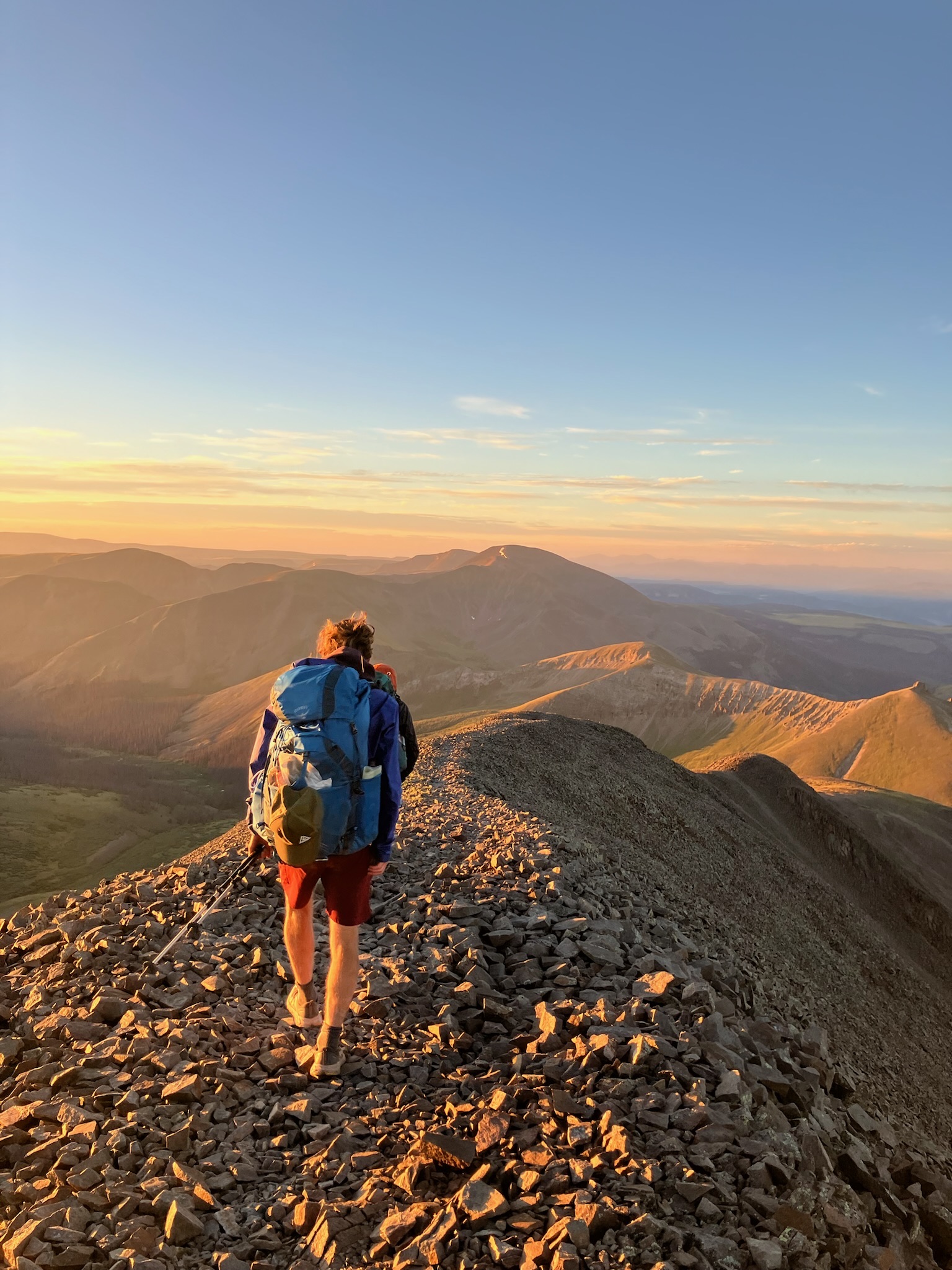
This pack is Ospreys version of an ultralight pack. Unlike many popular super light options used by thru hikers, the Exos features a robust mesh and frame while having a lighter fabric and fewer pockets than other Osprey packs. Its a middle ground between the stripped down leightweight packs and heavier traidtional packs. I really liked this pack. The mesh kept my back cool and it carried very comfortably when weighed down with five days of food. The material is water resistant, allowing me to not have to use a pack cover with my gear staying pretty dry in the rain (I still kept my sleeping bag and clothes in a waterproof trash bag). My only gripe is with the small hip pockets, they're not quite big enough to keep my phone or food I wanted in them. Overall I was really happy with this pack and plan to use it on future long trails. 9/10
Tent: Durston X Mid 1
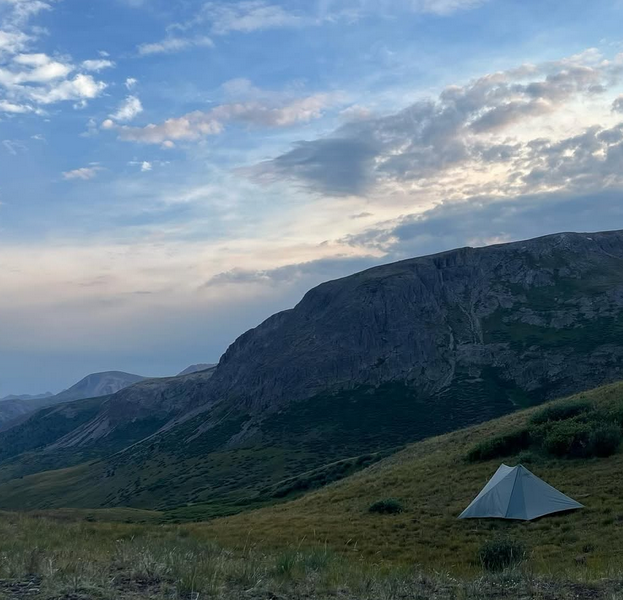
Like many others, I joined the "Cult of Durston" and bought an X mid. This tent is a trekking pole tent, meaning my hiking sticks function as the tent frame. Designed by a biologist-turned-business owner, the X mid has become one of the most popular popular trekking pole tent options. I was really happy with this tent, it performed very well in storms and rain, keeping me and my gear dry. It does have a bit of a learning curve to set up properly, but I got the hang of it and found it easy to pitch quickly. I like the two large vestibules to store my shoes and gear, and the interior was just big enough to be comfortable. It's made of sil poly, and dries very quickly in the sun. Some other hikers I was with had the Gossamer Gear Tent made of nylon. Nylon is less water resistant then sil poly, and takes longer to dry. 10/10
Sleeping bag: Enlightened Equipment Enigma 20 degree
This was my first time using a quilt: a sleeping bag with an open bottem. The idea is the sleeping pad provides the insulation on the bottom. This was also my favorite piece of gear. I have used a variety of sleeping bags over the years and none have been as comfortable as the Enigma. It kept me plenty warm without getting too hot or sweaty. It was also the biggest weight savings of any gear I purchased. I wasn't sure how somethign that light would keep me warm but it works great. No complaints 10/10
Sleeping Pad: Thermarest Prolite Apex
The combination of the Enigma quilt and Apex pad gave me the best sleep I have ever had in the backcountry. Its a bigger pad than other popular ultralight options, btu the weight tradeoff was very worth it. My only compaint is the amount of space it took up in my pad when rolled up. In the future I may try a lighter pad to see how it compares, but I will always fall back in the Apex. 7/10
Clothing
Base Layers
Shirt: Patagonia Capilene Sun Hoodie
Sun Hoodies feature long sleeves and a hood to protect your whole upper body from the sun. They are very popular among long distance backpackers who spend weeks at a time in the sun all day. This shirt is lightweight and breathable, making it very confortable when hiking in the heat all day. It's my favorite shirt to hike in and a piece of gear I'll use well into the future. 10/10
Shorts: Tj Maxx
I got these at TJ Maxx one day and I love them. Lightweight and comfortable. Dont know the brand unfortunately. The only wear after around 1000 miles hiked is a broken zipper. 10/10
Socks: Columbia and Darn Tough
I had a pair of Columbia and a pair of Darn Tough socks. The Columbia socks are thinner than the Darn Toughs, and gave me a few blisters, I had no issues with the Darn Tough. I usually wore one pair for two or three days before switching to the other. In the dry climate, my socks never got as rank as they would hiking back home in Virginia. Next time I'm just going to use two pairs of the Darn Tough.
Mid Layer: Melanzana Micro Grid
The Melenzana is a fleece mid layer featuring a big hood and roomy pockets. I purchased it during a quick town stop in Leadville, CO I bought my Melly during a quick stop in Leadville. It's the most comfortable fleece I have ever had. I loved having it to toss on during chilly evenings and mornings. Very comfortable. I'm wearing it as I write this review. 10/10
Rain Gear: REI
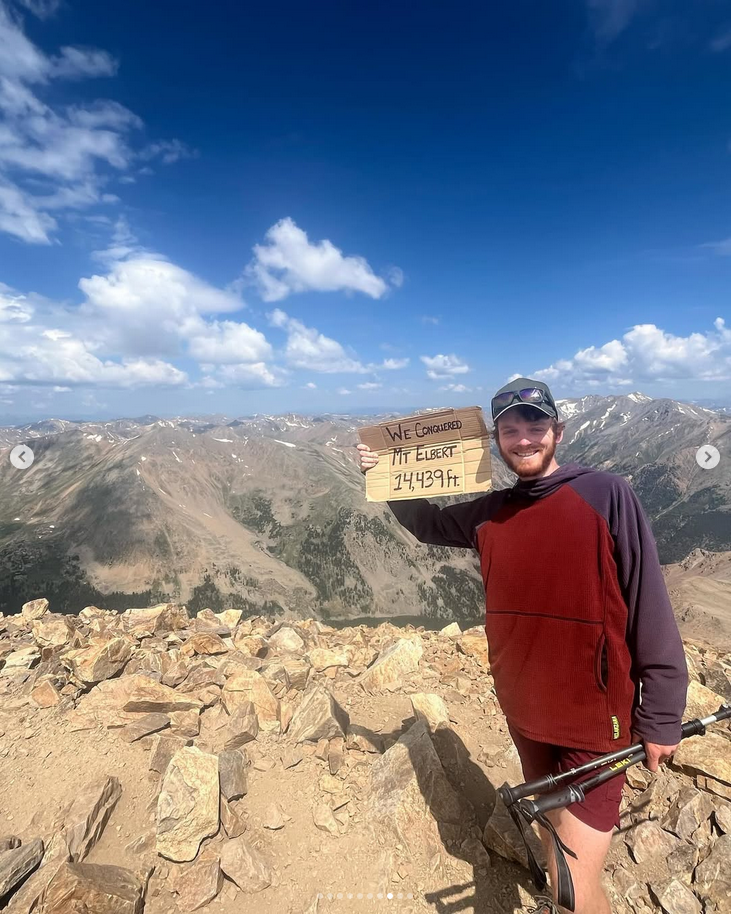
I carried my REI rain jacket and rain paints the whole trail. The rain jacket was great and kept me dry in the rain, and acted as insulation over the Melly when summiting San Luis Peak before sunrise. My rain paints mostly acted as a sit pad, I never had to use them as rain paints. The only time I wore them as pants was when sumitting San Luis peak. In the future I'd either not bring them for July hiking or get something lighter. Jacket: 8/10 Paints: 3/10 (didnt use)
Puffy: North Face Down Jacket
I got this in the REI used section at a good deal. I carried it the whole trail and never used it once. If I needed to be warm I had the Melly with maybe my rain jacket thrown on top. The combination of Melly/Down Jacket/Insulating Rain Jacket was more than needed. In the future I wouldn't bring the puffy or have the puffy + poncho instead of the rain jacket. NA/10: Extra weight
Cooking and Food Gear
Most of my cook kit is what I had on hand and have used on previous trips. I carried a pot and stove and cooked every night. I would sometimes cook in the mornings, but I usually preferred getting on Trail as quick as I could
Stove and Pot: REI
I got my stove and pot from REI a few years ago. Its your standard stove that screws on to a fuel canister. It's a standard backpacking cooking setup, and was reliable the whole trip
Food Storage: Ursack Major
I used the Ursack, an apparently bear-resistant bag you tie to a tree. I'm not sure it's any more effective than sleeping with your food, but it provided a piece of mind at night. A few times I slept with my food when I was above treeline (where bears are unlikely to be) and I had no issues. Another hiker had a two run ins with bears at her campsite, but they were both at heavily used campsites. I had the Ursack Major, which was just big enough to store 5 days of food on my longest food carry (Monarch Pass to Lake City).
Miscellaneus
Phone and Electronics
- Iphone 13: It worked. Used it for FarOut, music, photos, etc.
- Anchor 20000 mA battery: It was plenty big enough to charge my phone. My longest day between towns was 5 days and it only went a little under 50% with light phone use. I charged it overnight in town and used it to plug my phone in at night.
- Garmin InReach Mini 2: Checked in with my parent every night and occasionally used it to get the weather forecast. Worked as expected and never ran out of battery
- Anchor dual usb c wall charger: With two USB C ports I could charge my battery pack and inReach overnight. One of my favorite pieces of gear
- Apple Earpods: Used them pretty frequently for music. During the last few days on trail they just stopped working. I've used wireless earbuds since and I'll probably continue to do so when hiking